
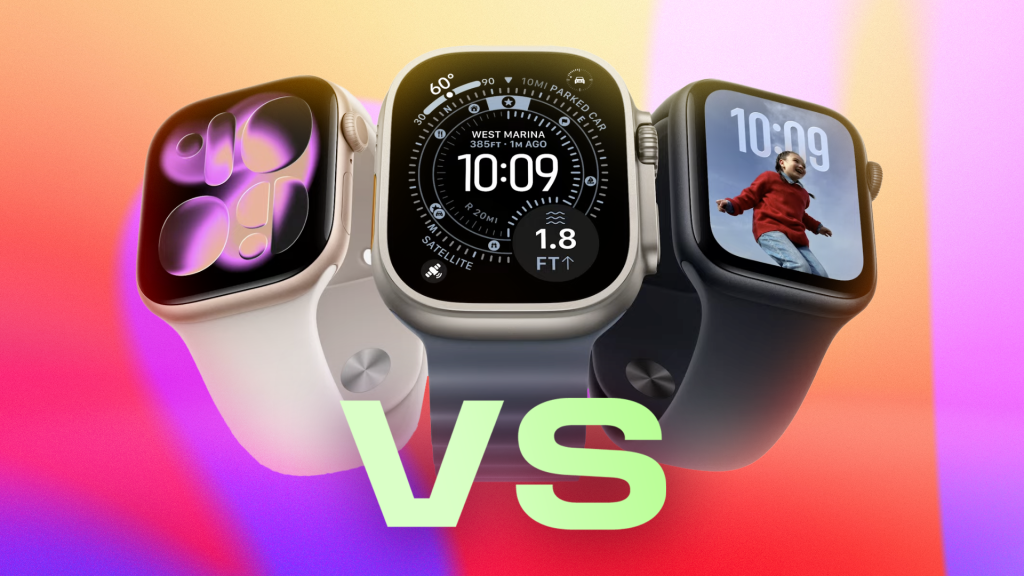
Apple Watch Series 11 vs. Ultra 3 and SE — the change took most observers by surprise. Here is what is now different, and what it means in practice..
They're all good smartwatches, but have their own strengths. Let's compare the details.
What emerged was clear in outline but layered in detail. Reading the announcement alongside the wider context suggests a deliberate move rather than a response to short-term pressure.
There is a longer arc here. Treating the current announcement as a single event misses the pattern that connects it to what came before.
What changed
Looked at closely, the implementation is more conservative than the announcement suggests. That is not a criticism — it reflects a market that has learned from earlier overreach.
- Time to pit the Apple Watch Series 11 against the Ultra 3 and SE 3.
- News AI Atlas Best AI Image Generators Best AI Chatbots Best AI Website Builders ChatGPT vs.
- If you buy through our links, we may earn a commission.
Why it matters
The competitive question here is not really about who announced what. It is about who can keep the promise once load rises and the conditions get less forgiving.
What to watch
The indicators worth tracking are unglamorous: response times at peak hours, the frequency of service interruptions, and how quickly support resolves problems that are genuinely hard.
The practical detail
The concrete checklist is this: hardware support, regional availability, contract length, and what happens to the service if the operator changes its approach.
In practice, the details will shift as more reporting lands, but the direction is clear enough to plan around.
This article draws on reporting from CNET. Read the original coverage for the full account.
864 views
Article history
- Article published
- Fact-check pass and source link added
- Updated with reader feedback


Really useful breakdown, thank you for putting this together.
That was my conclusion as well after a week of testing.
Really useful breakdown, thank you for putting this together.
Thanks for raising this — we have updated the comparison table above with the latest figures.
That was my conclusion as well after a week of testing.
Not always the case though — it depends heavily on the region.
Good addition, I had overlooked that entirely.
Same here, it made the decision much easier.
Has anyone measured this on a 5G connection for comparison?