
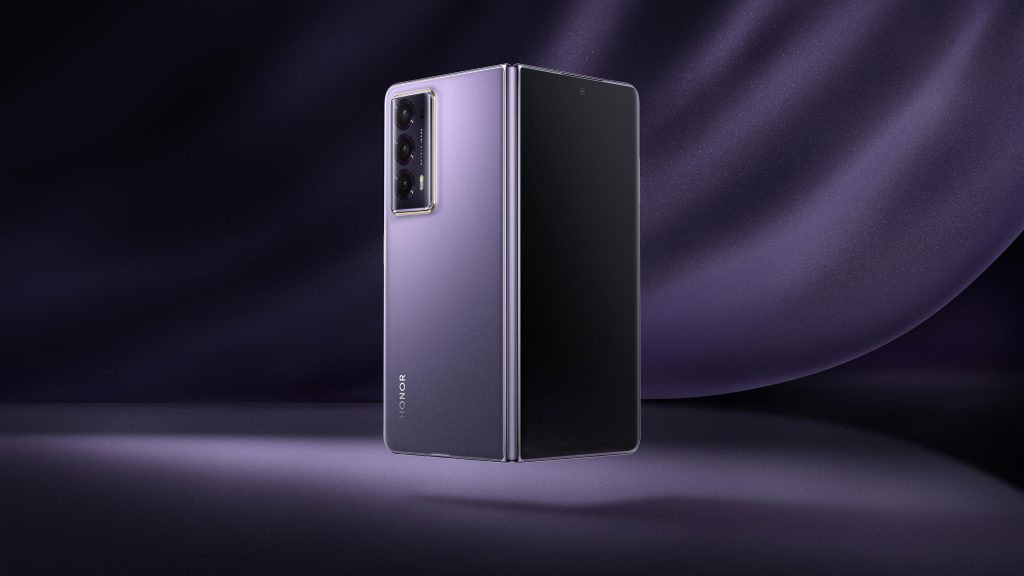
Magic V2, the World's Thinnest Foldable Phone, Will Soon Be Available Outside China — there is a concrete story behind the headlines, and it is more interesting than the coverage suggests..
Honor's Magic V2 fits flagship hardware and specs inside its slim frame.
CNET first reported the change, and the initial reaction focused on what it announced. The more interesting question is what it sets up for the months ahead, and that is where the practical consequences sit.
For anyone already following this space, the announcement lands on familiar ground. The unfamiliar part is the scale, and the fact that it is being treated as a baseline rather than an exception.
What changed
The specific mechanism matters as much as the headline. At the level of implementation, the change is narrower than the coverage implies, and considerably more actionable for people who plan their setup around it.
- Honor's Magic V2 fits flagship hardware and specs inside its slim frame.
- After first debuting in its native China, Honor’s slim foldable phone will soon be available internationally, giving fresh competition to Samsung’s Galaxy Z Fold 5.
- The Magic V2 will go on sale in parts of Europe and the UK, among other countries, before the first quarter of next year.
- The company didn’t reveal pricing information but in its native China, the V2 starts at 8,999 yuan.
Why it matters
This is the part that should shape a decision. Everything else — pricing, packaging, comparative features — matters less than whether the underlying delivery holds up under the conditions people actually live in.
What to watch
Two things are worth tracking. First, whether the early adopter experience holds as more people sign up. Second, whether the pricing structure survives the first round of competition. Both answers should arrive within the year.
The practical detail
Set aside the launch framing and the picture becomes clearer. For most people the decision reduces to a short checklist: confirm the technical requirements, check that the service is available in your region, and read the current terms rather than the summary of them.
The net effect is that the details will shift as more reporting lands, but the direction is clear enough to plan around.
This article draws on reporting from CNET. Read the original coverage for the full account.
8,448 views
Article history
- Article published
- Fact-check pass and source link added
- Updated with reader feedback



This matches my own experience after switching providers last year.
Very helpful. The section on router requirements was the bit I was missing.
Same here, it made the decision much easier.
Agreed on that point, it was exactly my experience too.
Appreciate the detail. We have linked the primary source and adjusted the summary accordingly.
Fair point, though for most European households the difference is minimal.
Same here, it made the decision much easier.
Good catch. The subscription detail in the previous revision was outdated and has now been corrected.
Not always the case though — it depends heavily on the region.
Excellent summary. The compatibility table saved me a lot of trial and error.
Good catch. The subscription detail in the previous revision was outdated and has now been corrected.