
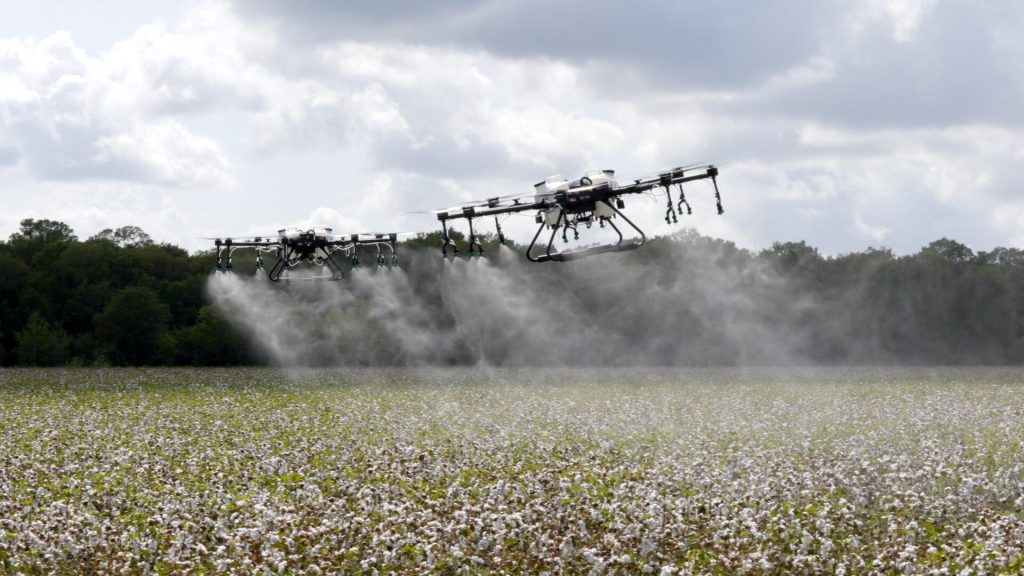
This AI Startup Is Bringing 400-Pound Drones to a Farm Near You: for a long time this was treated as a background trend. That framing no longer holds..
Old MacDonald had a drone, A-I-A-I-O.
The immediate coverage concentrated on the announcement itself. Stepping back, the timing is the part that matters — it arrives at a point when the surrounding ecosystem has already shifted considerably.
None of this is entirely new, and that is precisely why it is worth attention. The direction has been visible for a while; what has changed is how far it has been carried out.
What changed
At the level of detail, this is where the difference between theory and practice shows up. The constraints are real, and they determine what a reasonable setup looks like six months from now.
- The number of US farms peaked in 1935 at 6.8 million.
- Today, that figure is around 1.9 million, with an average farm size of 464 acres, per the US Department of Agriculture.
- In 1837, a young blacksmith by the name of John Deere designed a steel plow for sticky soil, which meant farmers no longer had to stop to scrape off dirt while plowing, for example.
Why it matters
The commercial framing tends to dominate the discussion, and it should. The question that decides whether any of this matters is whether the everyday experience improves for a household watching several hours a day.
What to watch
Watch the second-hand market rather than the launch coverage. Prices, availability and the quality of the underlying service tell the story more reliably than the announcements do.
The practical detail
Practical guidance is short. Verify compatibility with your own equipment, confirm regional availability, and treat any headline figure as a starting point rather than a settled result.
What matters here is that the details will shift as more reporting lands, but the direction is clear enough to plan around.
This article draws on reporting from CNET. Read the original coverage for the full account.
64,479 views
Article history
- Article published
- Fact-check pass and source link added
- Updated with reader feedback


Good write-up, though results on mobile networks seem noticeably different.
Great overview. I would add that the EPG refresh speed matters more than raw bitrate.
Been testing a few of these options and the latency difference is noticeable on evening peak.
Noted, we have added a note about regional availability. The original information was accurate for the EU only.
This matches my own experience after switching providers last year.
Has anyone measured this on a 5G connection for comparison?
I would be curious to see a follow-up after the next firmware update.
Good addition, I had overlooked that entirely.